How to Choose the Right Vehicle Oil Filter for Your Car
Choosing the right vehicle oil filter is crucial for your car's performance and longevity. A quality oil filter can enhance engine efficiency by up to 15%. Studies show that a clogged filter can lead to increased wear and tear on engine components. In fact, using a subpar filter might reduce your engine's lifespan significantly.
Vehicle oil filters are not all created equal. Some filters feature advanced filtration media that capture more contaminants. Selecting the right filter can greatly reduce the risk of engine damage. Experts recommend choosing filters that meet or exceed OEM specifications.
Notably, many vehicle owners overlook the importance of regular oil filter changes. Ignoring this can lead to catastrophic engine failure. Thus, it is essential to analyze your filter options thoroughly. Making an informed choice can protect your vehicle from costly repairs down the line.
Understanding the Importance of Vehicle Oil Filters
Vehicle oil filters play a critical role in maintaining your car's engine health. They trap contaminants and prevent them from circulating in the engine. This function ensures smoother operation and extends the life of your vehicle. A clogged or ineffective filter can lead to serious engine damage. Regularly inspecting and replacing your oil filter is essential for optimal performance.
Choosing the right oil filter involves understanding its specifications. Filters vary in size, design, and filtration capability. Some models are better suited for specific conditions. For example, extreme temperatures can affect filter efficiency. Many car owners overlook this aspect, leading to poor choices. It's important to research and consult resources to enhance your understanding.
An improperly chosen filter can result in increased wear and tear on engine components. It may also reduce oil flow, leading to overheating. Some individuals might choose based on price alone, which can backfire. Reflecting on past experiences with vehicle maintenance can guide better choices in the future. Prioritizing quality and compatibility will yield long-term benefits for your vehicle.
Types of Oil Filters and Their Functions
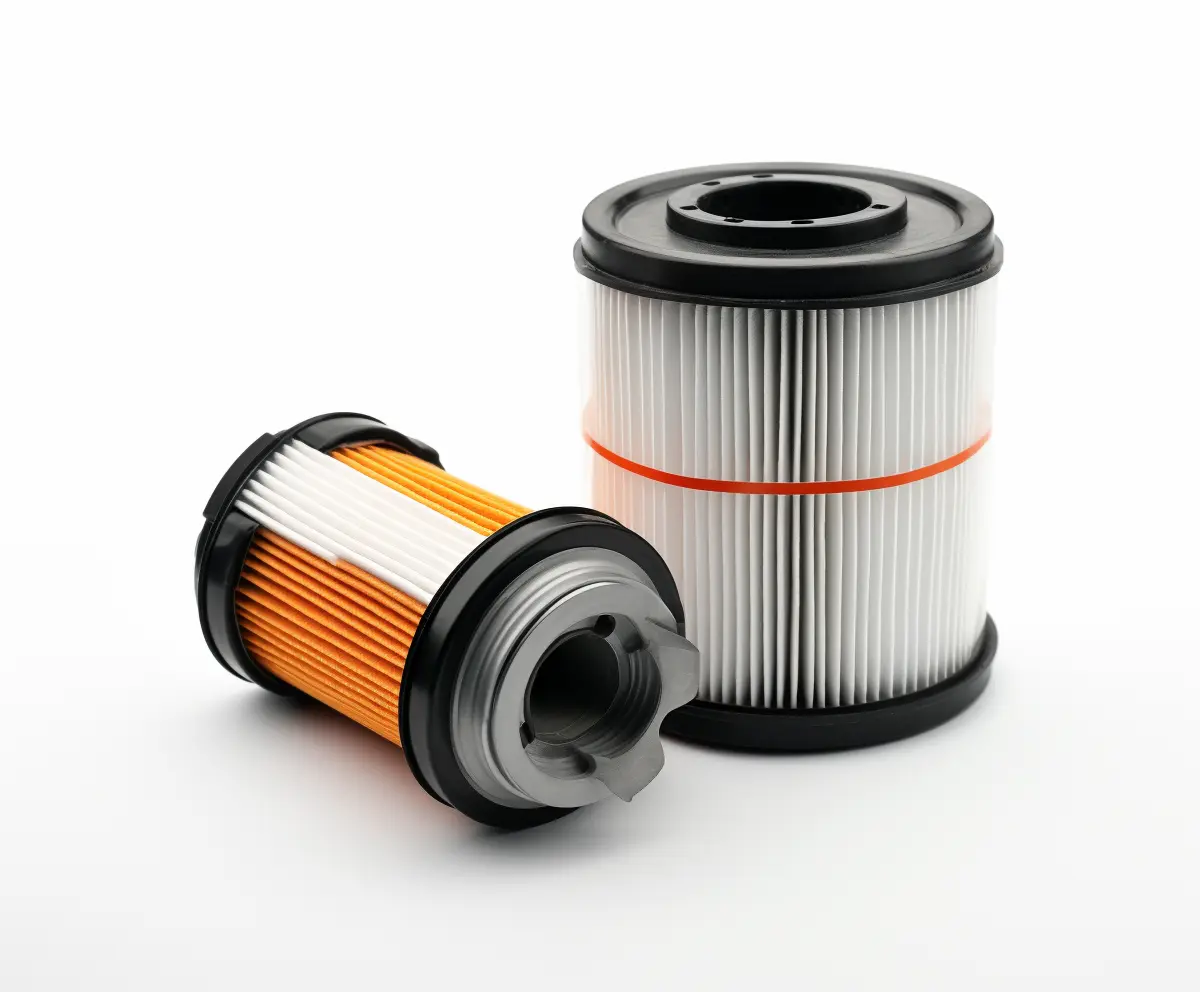
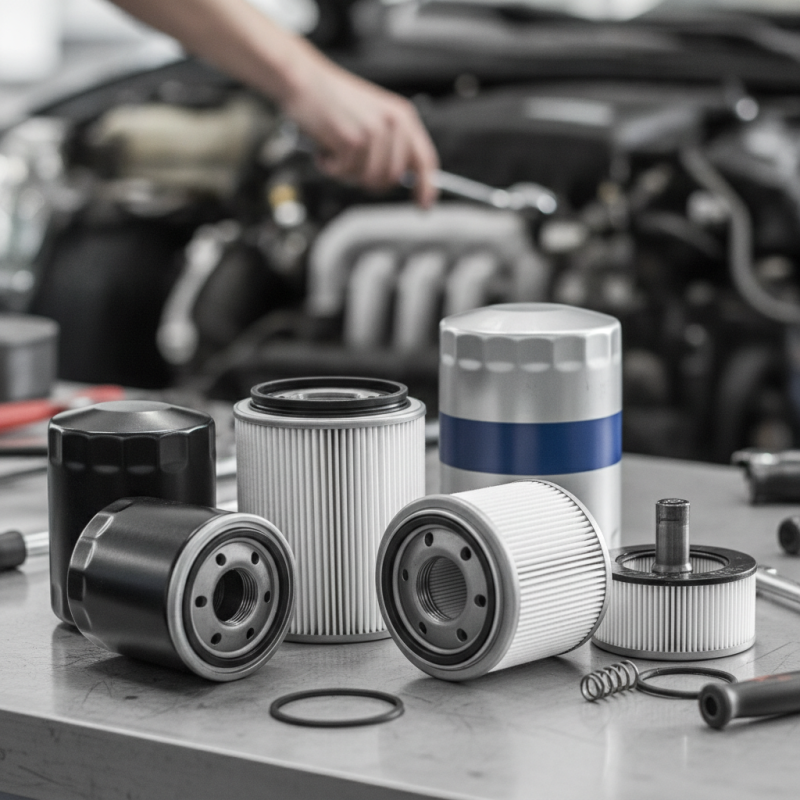
When selecting an oil filter for your vehicle, understanding the different types is crucial. Primarily, there are three common types: mechanical, cartridge, and spin-on filters. Mechanical filters use a pleated design to trap contaminants. They are straightforward and widely used. Cartridge filters often require a complete replacement of the filter element rather than the entire canister. This option can be economical but may be more complicated to replace. Finally, spin-on filters combine convenience with efficiency, allowing for quick changes.
Each filter type has its advantages and disadvantages. Mechanical filters tend to handle smaller debris effectively. However, they can sometimes clog quickly if the oil is neglected. On the other hand, cartridge filters may take more time to change but often have better filtration capabilities. Spin-on filters offer ease of use but can vary in quality. Some may not filter as efficiently as others. As you weigh your choices, also consider your vehicle's requirements and oil change frequency, which can affect filter performance. Reflecting on these details ensures you make an informed decision for your engine's health.
Factors to Consider When Choosing an Oil Filter
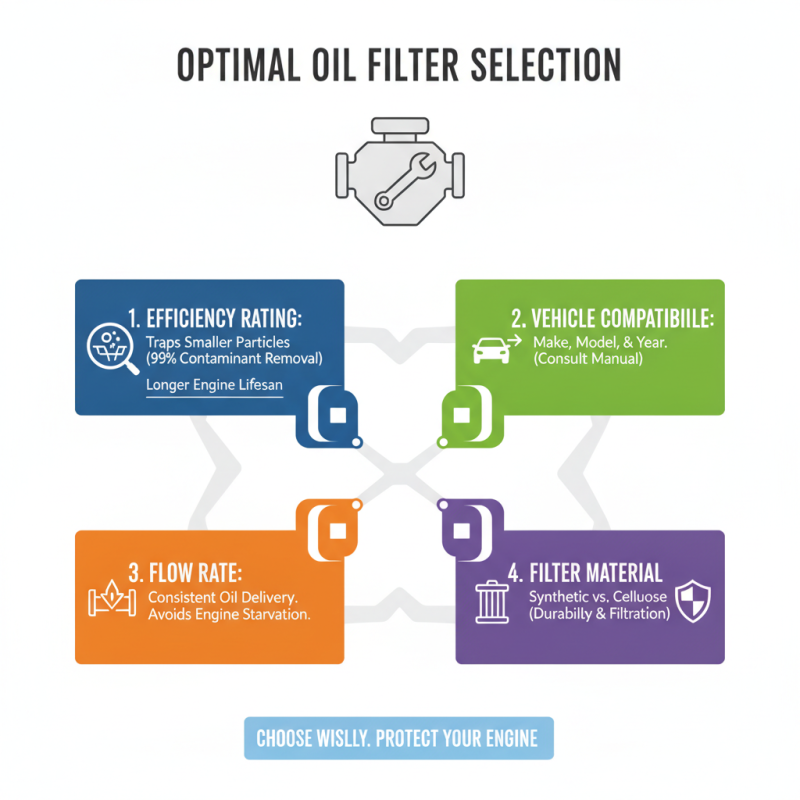
Choosing the right oil filter for your vehicle is crucial. Several factors contribute to this decision. First, consider the filter's efficiency rating. Filters with a higher efficiency capture smaller particles, offering better protection for your engine. According to industry reports, an efficient oil filter can remove up to 99% of contaminants, which extends your vehicle's lifespan.
The oil filter's capacity is also significant. Each filter has a specific capacity that dictates how much dirt and debris it can trap before needing replacement. A filter with a higher capacity is beneficial, particularly for vehicles that endure heavy usage or extreme conditions. Look for reports indicating that filters with larger capacities can improve overall engine performance.
Tips: Choose a filter that matches your vehicle’s specifications. Always verify your owner's manual for compatibility. Regularly replacing the filter according to the manufacturer's guidelines is essential for optimal performance. Also, pay attention to the installation process. A poorly installed filter may lead to leaks, compromising your vehicle’s safety.
How to Identify the Right Size and Specifications
Choosing the right oil filter for your vehicle is crucial for optimal engine performance. Start by identifying the correct size and specifications for your car. Check your owner’s manual for specific measurements, as oil filters come in various sizes. You need to know dimensions like the height and diameter of the filter.
When selecting a filter, consider its compatibility with your engine type. Some filters are designed for specific models or engine types. It’s essential to ensure that the filter meets the OEM specifications. Using the wrong filter can lead to serious engine issues.
Tips: Keep a record of your vehicle's oil change schedule. This will help you know when to check or replace the oil filter. Always compare different filters side by side. Look at features like filtration efficiency and design. Remember, a higher price does not always mean better quality. Reflect on your past filter choices; they may not have served you well. Learning from previous mistakes can guide your choices now.
How to Choose the Right Vehicle Oil Filter for Your Car - How to Identify the Right Size and Specifications
| Filter Type |
Dimensions (mm) |
Thread Size |
Bypass Valve |
Capacity (L) |
| Cartridge |
80 x 70 |
M20x1.5 |
Yes |
4.5 |
| Spin-On |
92 x 90 |
M22x1.5 |
No |
5.0 |
| Heavy Duty |
100 x 120 |
M24x1.5 |
Yes |
8.0 |
| High Efficiency |
85 x 66 |
M16x1.5 |
No |
4.0 |
Installation Tips for Your Selected Oil Filter
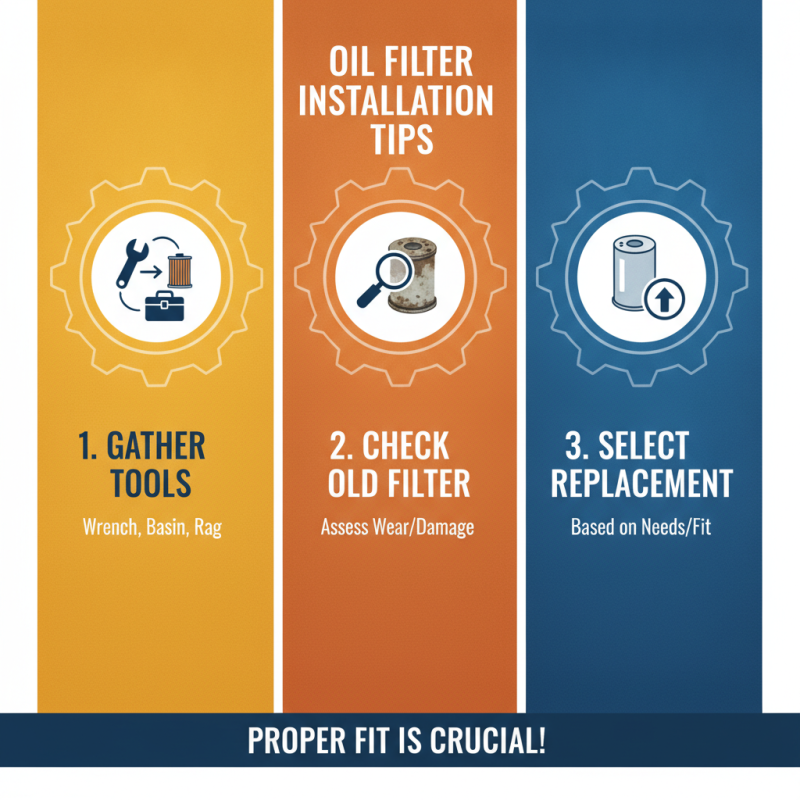
When installing your oil filter, ensuring a proper fit is crucial. Start by gathering essential tools: an oil filter wrench, an oil catch basin, and a clean rag. Before touching the new filter, check the old one. Look for any signs of wear or damage. This gives insight into what to look for in replacements. Understanding why changes are necessary can guide your selection process.
Cleaning the engine area around the filter is vital. Dirt or old oil can compromise the seal. Apply a thin layer of oil on the gasket of the new filter. This helps create a better seal and makes future removal easier. Screw the new filter on by hand until it is snug, but avoid overtightening. It can cause leaks or make removal difficult later. Take time during this step and reflect if you’ve done it correctly.
After installation, run the engine for a few minutes. Check for leaks by observing the area around the filter. If you see drips, tighten it slightly. Don’t rush this process. Learning proper techniques now will lead to smoother changes in the future. Pay attention to your vehicle's needs for optimal performance.

 Products
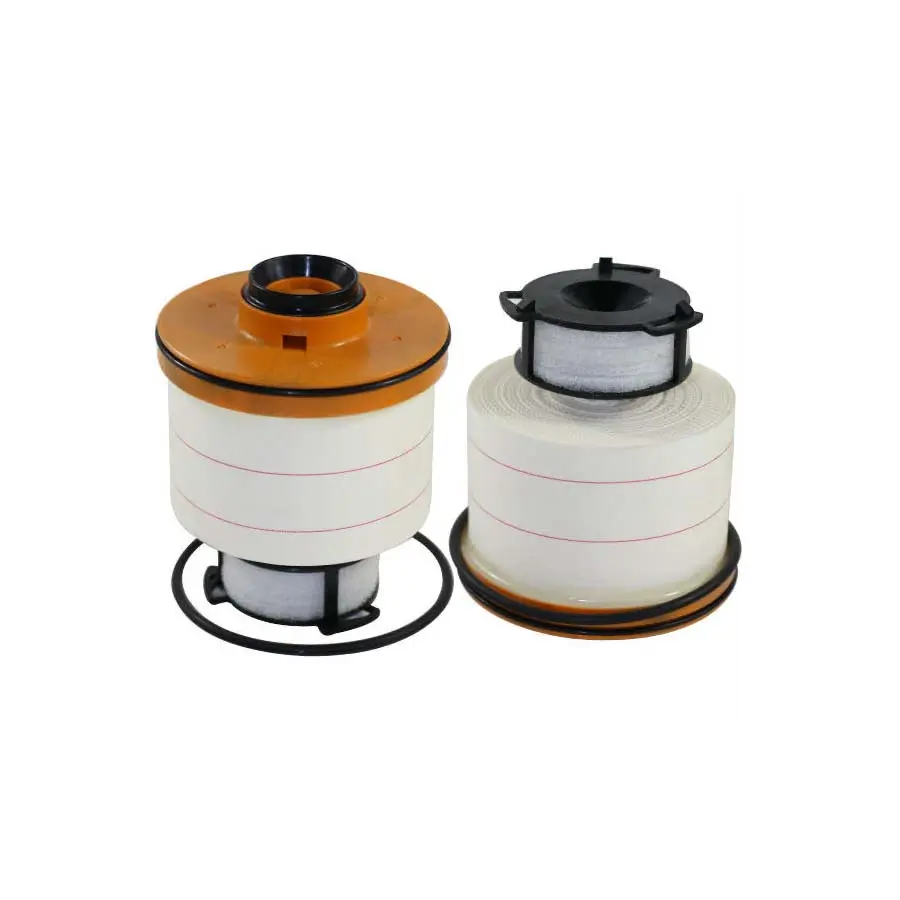 FUEL FILTER
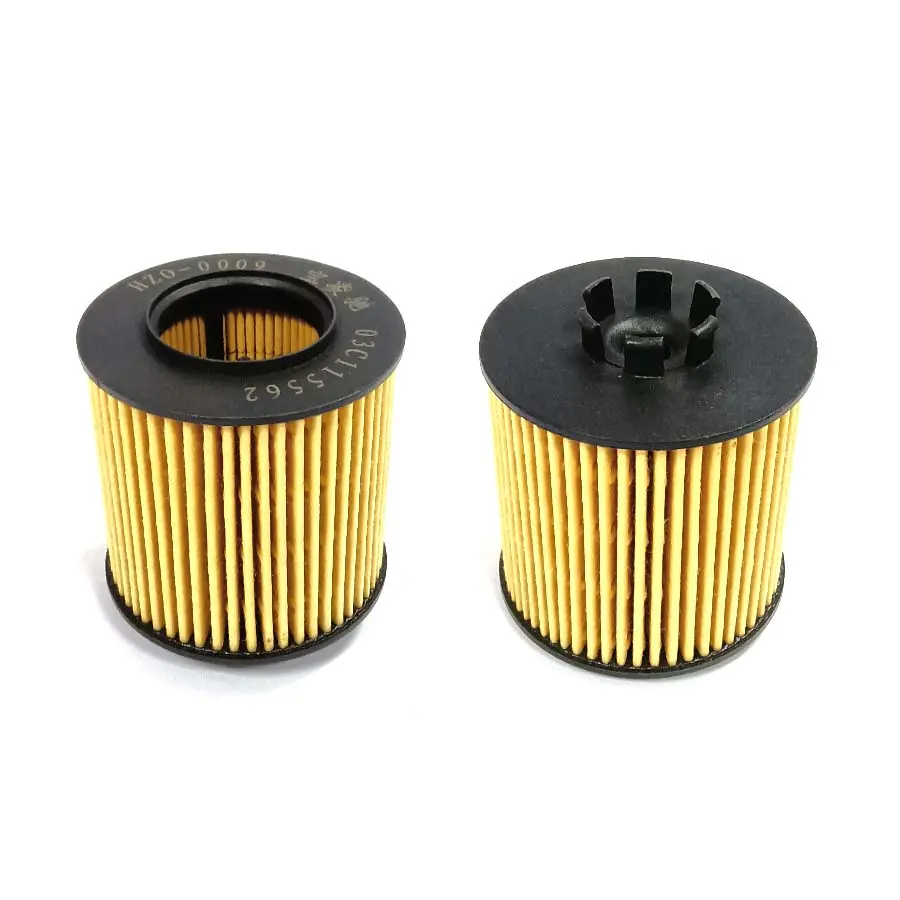 OIL ELEMENT FILTER
 OIL FILTER
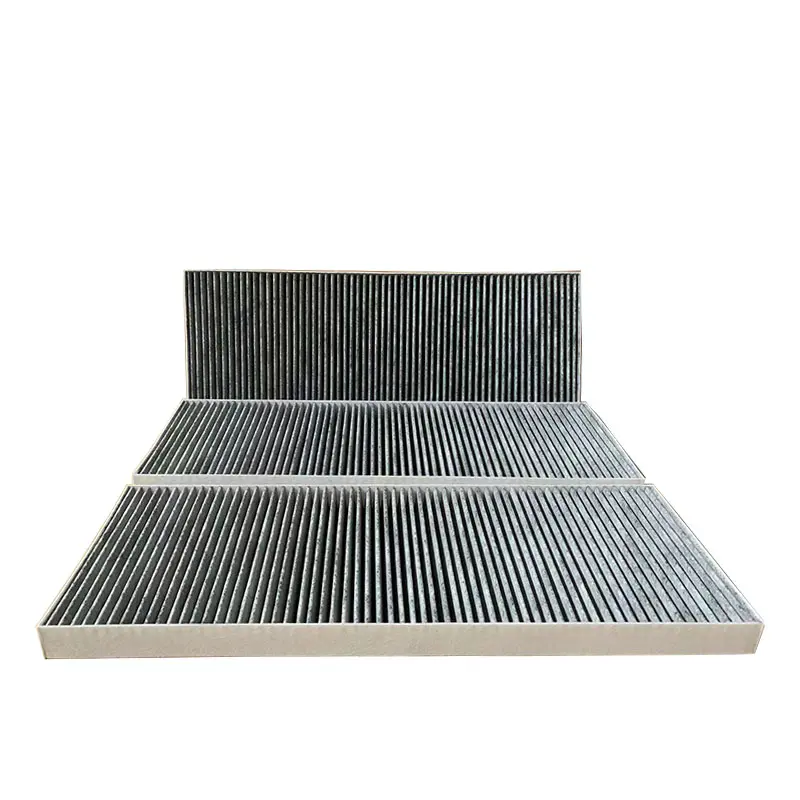 CABIN FILTER
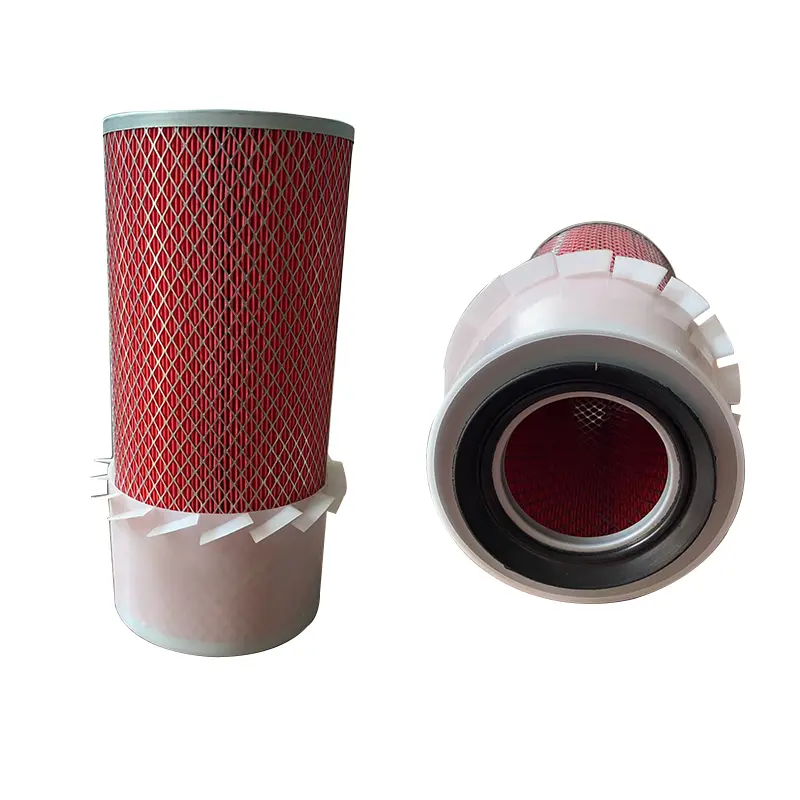 AIR FILTER