What Are the Top Types of Cabin Air Filters?
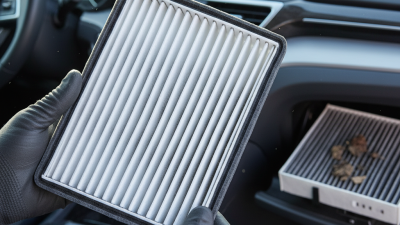
Cabin air filters come in several common types, and each is designed to manage different airborne particles and odors. A standard particulate filter can trap dust, pollen, and road debris as air enters the vehicle. Activated-carbon versions add a layer that can reduce some odors and gaseous pollutants. Combination filters bring these functions together, while certain models use electrostatic materials to attract fine particles. The details vary by product and vehicle.
The right choice depends on your driving conditions, comfort needs, and the filter specified for your car. A dusty commute may make particle filtration especially useful. Frequent traffic through tunnels or busy streets may make odor reduction a priority. Still, no cabin filter removes every contaminant, and performance depends on fit, airflow, and timely replacement. Small details matter. A filter that does not match the vehicle can restrict airflow or leave gaps around its edges.
This guide compares the top types of Cabin Air Filter, explains what each can and cannot do, and highlights practical trade-offs. Check the owner’s manual before buying, since filter dimensions and recommended service intervals differ between vehicles. Product labels can also be confusing; terms such as “premium” do not always explain measurable performance. It is tempting to choose the most expensive option, but that may not be the best fit. A careful comparison—and a little skepticism—can lead to a more informed choice.
How Cabin Air Filters Clean Incoming Air
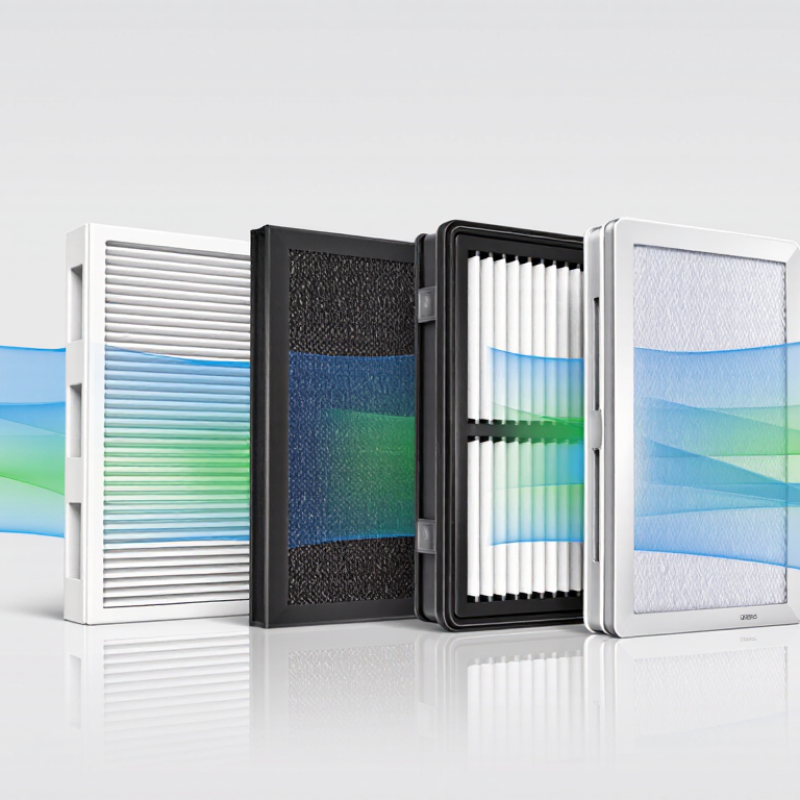
Cabin air filters clean incoming air before it reaches the vents and occupants. A blower fan pulls outside air, or recirculated cabin air, through layers of filter media. Pleated particulate filters catch dust, pollen, road debris, and some soot. Activated-carbon layers can also reduce certain odors and gases, though performance varies with design and use. Some high-efficiency options capture finer particles, but they must suit the vehicle’s airflow requirements.
The process is simple, but not passive. As air passes through, particles collide with fibers and stay trapped in the filter. A clogged filter can restrict airflow, making the fan sound louder and weakening defrosting or cooling. That change may happen gradually. Less air through vents. Drivers may notice only when windows fog or a dusty smell lingers. Yet odors can come from damp ducts or other sources, not just the filter.
Filter types serve different needs. Basic particulate media help with everyday dust and pollen; carbon versions add odor adsorption, not a cure for every smell. Check the vehicle manual for the correct size and replacement interval, since climate and dusty roads affect service life. During installation, match the airflow arrow and seat the edges evenly. A filter may look clean in the center yet be packed along its folds, so visual checks are imperfect. Replacing it too late is common.
What Are the Top Types of Cabin Air Filters?
Cabin air filters clean incoming air in different ways. This chart shows particle-size reference points—not the filtration performance of any particular filter.
How the filter types work: Particulate filters capture airborne particles in their media. Activated-carbon filters adsorb some gases and odors, and are often combined with particulate media. Electrostatic filters use charged media to attract particles. HEPA-grade filters are designed to meet a defined particle-filtration standard; availability and performance vary by vehicle and filter.
PM10 and PM2.5 are particle-size class limits; ultrafine particles are commonly defined as smaller than 0.1 micrometers. Particle-size references do not indicate how well a cabin filter captures them.
Particulate Cabin Air Filters: Structure and Function
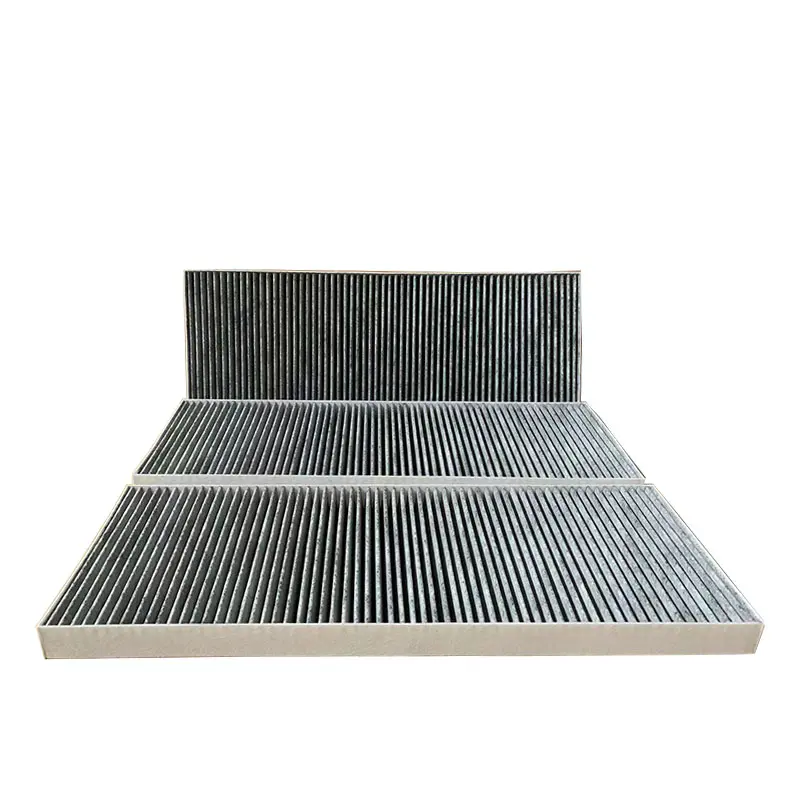
Particulate cabin air filters use fibrous media folded into pleats and held by a rigid frame. The pleats increase surface area without taking up much dashboard space. As air passes through, fibers capture particles by interception, impact, and diffusion. Some media also use electrostatic charge to attract fine particles. The details matter. A filter’s performance depends on particle size, airflow, and how much dust has accumulated; a high capture rate can also increase airflow resistance. ISO 11155-1:2020 specifies test methods for evaluating particulate filtration and airflow resistance in passenger-compartment filters. It provides a testing framework, not one universal efficiency figure for every filter.
The health context is significant, but cabin filters are not medical devices. The World Health Organization’s 2021 air quality guidelines set annual and 24-hour PM2.5 levels at 5 and 15 micrograms per cubic meter, respectively. These are ambient-air guideline values, not cabin-filter pass marks. A filter may reduce incoming particles, yet leaks around its edges or a clogged surface can weaken real-world results. A clean-looking filter can still restrict airflow. That is easy to miss. Checking the vehicle’s specified replacement interval and inspecting the filter during dusty seasons can help, though appearance alone cannot confirm filtration performance.
What Are the Top Types of Cabin Air Filters? - Particulate Cabin Air Filters: Structure and Function
| Filter type |
Typical structure |
How it captures particles |
Common targets |
Practical characteristics |
| Pleated particulate filter |
A folded sheet of porous cellulose, synthetic fibers, or a blend, supported by a frame. |
Air passes through the fibrous web. Particles are retained through mechanisms such as interception, impaction, and diffusion. |
Dust, pollen, road debris, and other airborne particles, depending on the filter design. |
Pleats provide more media area within a compact housing. Performance and airflow resistance vary by construction and condition. |
| Electret synthetic filter |
A nonwoven synthetic-fiber medium that carries a persistent electrostatic charge; it may be pleated. |
Mechanical filtration combines with electrostatic attraction to help capture particles as air moves through the fibers. |
Fine dust, pollen, and other suspended particles, with effectiveness dependent on the specific media and test conditions. |
Can offer particle capture without relying only on a dense physical barrier. Dust loading, moisture, and design can affect performance. |
| Multi-layer particulate filter |
Two or more layers of fibrous media, often with different fiber structures or densities, arranged in one filter element. |
Different layers provide successive opportunities for particles to be retained while air flows through the media. |
A range of airborne particles, from larger debris to smaller suspended material, depending on layer design. |
Layering can balance particle capture and airflow. It does not by itself establish a particular efficiency rating. |
| Particulate filter with a carbon layer |
A particulate-filter base combined with a thin layer or section containing activated carbon. |
The fibrous media captures particles; activated carbon can adsorb some gases and odors when present in sufficient quantity. |
Dust and pollen, plus some odor-causing compounds depending on carbon content and exposure. |
This is a combination design rather than a particulate-only medium. Carbon does not capture all gases, and its capacity is finite. |
| Cabin filter with an antimicrobial treatment |
A particulate-filter medium incorporating a treatment intended to limit microbial growth on the media. |
The underlying fibrous filter captures particles; the treatment is a separate feature and does not replace filtration. |
Airborne particles; any additional microbial claims depend on the treatment and supporting test data. |
A treated filter should not be assumed to sterilize cabin air or prevent illness. Follow the vehicle maker’s replacement guidance. |
Note: Cabin-filter performance depends on media, fit, airflow, and loading. A particulate cabin filter is not automatically a HEPA filter; check the product’s documented test results for any stated efficiency.
Activated Carbon Filters: Odor and Gas Reduction
Activated carbon cabin filters are designed to reduce some gases and odors that ordinary particle media may not capture. Their porous carbon adsorbs certain molecules as air passes through. On a damp morning, a stale exhaust smell may still enter through the vents. A carbon layer can help, but results depend on the gas, carbon quantity, airflow, and filter age. No magic.
The U.S. EPA’s 2018 report, Residential Air Cleaners: A Technical Summary, explains that gas-phase filters work differently for different pollutants and have limited capacity. A particle rating alone does not show how well a filter removes gases. For automotive filters, ISO 11155-2:2019 specifies a gas-adsorption test method. Lab results still cannot guarantee the same performance in every car. I’d treat a fading odor reduction as a clue, not proof: the carbon may be saturated, or the smell may have another source. Check the vehicle manual’s replacement interval, and inspect the filter for dust, dampness, or damage.
Electrostatic and Combination Filters
Electrostatic cabin air filters use charged fibers to attract and hold airborne particles as air passes through the pleats. They can trap common dust, pollen, and some fine particles, depending on the filter’s design and condition. Their performance is not identical across vehicles or products. A clogged filter may restrict airflow, even if it once worked well. Fit matters. A loose edge can let unfiltered air bypass the material.
Combination filters add layers with different jobs. A particle-filtering layer may capture dust and pollen, while activated carbon can reduce some odors and certain gases. Carbon does not remove every smell or make outside air completely clean. That distinction is easy to miss. In practice, strong odors can linger, especially when the cabin draws air through a heavily polluted area. Check the vehicle manual for the correct size and replacement interval. If airflow from the vents weakens or the filter looks packed with debris, inspect it sooner. A visual check is useful, but it cannot measure filtration performance. The right choice depends on local dust, driving conditions, and whether odor reduction matters to you.
How to Choose the Right Cabin Air Filter Type
Choose a cabin air filter according to the air you encounter and your vehicle’s requirements. A standard particulate filter can trap dust, pollen, and other airborne particles. An activated-carbon layer can also reduce some odors and gases, though it cannot remove every pollutant. WHO’s 2022 air-quality database used 2019 measurements. It reported that 99% of people lived where guideline levels were exceeded. That figure describes outdoor air, not cabin exposure, but it shows why filtration needs vary by route and season. Fit matters most.
Check the owner’s manual before choosing a higher-efficiency filter. Dense media may restrict airflow if the vehicle’s HVAC system is not designed for it. For frequent dusty-road driving, prioritize particle filtration; for traffic fumes or persistent odors, consider a carbon layer. Compare published filtration and airflow-resistance test results, including results using ISO 11155 methods, rather than relying on vague “high-efficiency” claims. A filter that fits poorly can let air bypass its media. Replace it at the vehicle maker’s stated interval, or inspect it sooner after dusty trips. I would not choose by filter color or thickness alone; those details can look convincing but prove little.

 Products
 FUEL FILTER
 OIL ELEMENT FILTER
 OIL FILTER
 CABIN FILTER
 AIR FILTER