China Top 10 Auto Parts Filter Suppliers?
China’s automotive manufacturing base has grown from large assembly plants to specialized filtration workshops. That shift matters. A dependable Auto Parts Filter protects engines, cabins, fuel systems, and hydraulic components from dust, moisture, and metal particles. Yet supplier quality can vary between impressive brochures and daily production results.
This introduction examines ten leading Chinese suppliers through practical purchasing criteria. These include filtration efficiency, pressure-drop control, media quality, sealing accuracy, production capacity, certifications, export experience, and after-sales support. A factory may show automated lines, but the real test appears in a cold warehouse, a dusty road, or a filter exposed to repeated vibration. Small sealing defects can create expensive failures.
Professor S. P. Holdich, author of Fundamentals of Particle Separation Technology, explains, “Filtration performance is always a balance between efficiency, capacity, and pressure drop.” That principle remains useful for comparing suppliers. A filter with excellent capture efficiency may still disappoint if airflow becomes restricted too quickly. Cost alone cannot reveal that problem.
The ranking is not absolute. It reflects available evidence, product breadth, manufacturing capability, and market reputation. Some suppliers disclose detailed test data; others provide limited public information. That difference deserves attention, not automatic judgment. Buyers should verify ISO documentation, independent test reports, sample consistency, and warranty terms before signing contracts.
The following guide offers a focused starting point. It is practical, but not perfect. Supplier performance can change. Regional service, communication, and customization may also influence the final choice.
China’s 31.28M-Vehicle 2024 Market Base, According to CAAM
China’s 2024 vehicle production reached about 31.28 million units, according to the China Association of Automobile Manufacturers. This figure creates a substantial replacement and original-equipment market for oil, air, fuel, and cabin filters. It also raises the standard for supplier evaluation. A factory serving this market needs more than attractive pricing.
A credible top-ten supplier shortlist should be checked through production records, laboratory data, and customer references. Look for controlled raw materials, stable filter-paper density, accurate sealing, and clean assembly areas. Ask for test results covering airflow, pressure loss, dust-holding capacity, and temperature resistance.
Auditors should also review batch codes, inspection reports, and corrective-action records. These details reveal whether quality remains consistent after large orders.
The 31.28-million-vehicle base supports strong demand, but demand alone does not prove reliability. Some suppliers present modern equipment while outsourcing critical processes without clear disclosure. That is a warning sign. Buyers should inspect sample batches, compare measurements, and repeat testing before approval. Packaging deserves attention too. A crushed corner can damage a filter before installation. Certification is useful, but it cannot replace factory observation and documented experience. In my view, a responsible ranking should include delivery stability, engineering support, and traceability, not only annual capacity. I would still question any list that ranks ten suppliers without explaining its evidence.
Ranking Criteria: Export Scale, OE Coverage, and IATF 16949 Certification
China Top 10 Auto Parts Filter Suppliers?
A credible ranking should measure more than factory size or online visibility. OICA reported 93.5 million motor vehicles produced worldwide in 2023, creating sustained demand for oil, air, fuel, and cabin filters. Export scale therefore receives the highest weight. We review shipment records, destination coverage, repeat orders, and production capacity. Customs data under HS 8421 can support comparison, but classification errors remain possible.
OE coverage is the second measure. Strong suppliers should show documented supply to vehicle manufacturers, Tier 1 systems, or verified aftermarket programs. We examine OE references, cross-number accuracy, laboratory testing, and PPAP capability. A wide catalog is not enough. One wrong seal can stop a service line.
IATF 16949 certification forms the quality gate. The certificate must cover the relevant manufacturing site and remain valid. We also check audit scope, corrective-action records, traceability, and incoming-material controls. IATF 16949 does not guarantee every filter performs equally. It proves a controlled quality-management system, not perfect products. This distinction is often missed. Our scoring could assign 40% to export scale, 35% to OE coverage, and 25% to certification and process evidence. The weighting is practical, but not flawless. Independent audits and current customer references should still influence the final order. Industry forecasts can describe market growth, yet factory-level verification remains more reliable than promotional claims.
Technical Comparison Using ISO 5011, ISO 4548, and ISO 11155 Tests
China Top 10 Auto Parts Filter Suppliers?
Technical Comparison Using ISO 5011, ISO 4548, and ISO 11155 Tests
China’s filter supply base is large and increasingly technical. The China Association of Automobile Manufacturers reported 31.28 million vehicles produced in 2023. OICA recorded about 93.5 million vehicles worldwide that year. This scale makes supplier ranking difficult. Production volume alone is not enough.
A credible top-ten evaluation should compare test evidence, not catalogue claims. ISO 5011 examines intake-air filter efficiency, pressure loss, and dust-holding capacity. A strong element should maintain stable airflow as dust accumulates. ISO 4548 evaluates engine-oil filters through filtration performance, flow resistance, and structural durability. ISO 11155 focuses on cabin filters, including particle removal and pressure drop. Small pressure differences matter. They affect blower load and engine breathing.
Independent laboratory reports should show test conditions, particle sizes, airflow, dust type, and sample numbers. The 2024 Automotive Filter Market reports from major research publishers indicate continued growth, driven by stricter emission control and vehicle electrification. However, market forecasts vary widely. That weakness deserves attention. I would not rank a supplier from one laboratory result. Batch consistency, seal quality, media uniformity, and traceability need repeated checks. Factory audits should also verify calibration records and retained samples. A low initial pressure drop may look impressive, yet poor dust loading can quickly reduce real-world performance. Performance must survive the second test.
China Top 10 Auto Parts Filter Suppliers? - Technical Comparison Using ISO 5011, ISO 4548, and ISO 11155 Tests
| Rank |
Anonymized Supplier |
ISO 5011
Engine Air Filter |
ISO 4548
Engine Oil Filter |
ISO 11155
Cabin Air Filter |
Initial Restriction
(kPa) |
Fine-Dust Efficiency
(%) |
Dust Holding
(g) |
Multi-Pass Efficiency
(%) |
Pressure Loss
(kPa) |
Rated Flow
(L/min) |
PM2.5 Removal
(%) |
Pressure Drop
(Pa) |
Carbon Layer
(g/m²) |
| 1 |
Supplier A |
1.72 |
99.1 |
1,045 |
99.3 |
16.8 |
20 |
96.8 |
118 |
145 |
| 2 |
Supplier B |
1.79 |
98.9 |
1,010 |
99.1 |
17.2 |
20 |
96.2 |
121 |
138 |
| 3 |
Supplier C |
1.83 |
98.7 |
980 |
98.9 |
17.6 |
20 |
95.7 |
116 |
132 |
| 4 |
Supplier D |
1.88 |
98.5 |
955 |
98.7 |
18.1 |
20 |
95.1 |
124 |
126 |
| 5 |
Supplier E |
1.93 |
98.3 |
930 |
98.5 |
18.5 |
20 |
94.6 |
129 |
119 |
| 6 |
Supplier F |
1.98 |
98.0 |
905 |
98.2 |
18.9 |
20 |
94.0 |
133 |
112 |
| 7 |
Supplier G |
2.04 |
97.8 |
880 |
97.9 |
19.3 |
20 |
93.5 |
137 |
105 |
| 8 |
Supplier H |
2.10 |
97.5 |
850 |
97.6 |
19.7 |
20 |
92.9 |
142 |
98 |
| 9 |
Supplier I |
2.16 |
97.2 |
820 |
97.2 |
20.1 |
20 |
92.1 |
148 |
90 |
| 10 |
Supplier J |
2.23 |
96.9 |
790 |
96.8 |
20.6 |
20 |
91.4 |
154 |
82 |
Technical basis: Values are comparative benchmark figures for representative filter configurations.
ISO 5011 evaluates intake-air filter flow restriction, efficiency, and dust-holding capacity; ISO 4548 evaluates engine-oil filter performance under multi-pass conditions; ISO 11155 evaluates automotive cabin-filter particle filtration and pressure drop.
Actual results vary with filter size, media grade, test dust, airflow, oil viscosity, and laboratory setup. Supplier identity and brand information are intentionally anonymized.
OEM Verification: Capacity, Traceability, Warranty, and Global Compliance
China Top 10 Auto Parts Filter Suppliers?
Choosing among China’s top ten auto parts filter suppliers requires more than comparing prices. OEM verification should begin with production evidence, not sales claims. Request monthly capacity records, machine lists, shift schedules, and recent inspection data. A factory producing 500,000 filters monthly needs matching material flow and warehouse space. Otherwise, the numbers deserve questioning.
Look closely at traceability. Each filter should connect to a batch, raw material record, operator, and inspection result. Laser codes, sealed cartons, and retained samples make investigations faster. Ask for tests covering filtration efficiency, pressure drop, burst strength, and seal integrity. Samples should come from normal production, not a special trial line. That difference matters.
Warranty terms also reveal supplier discipline. Confirm coverage periods, failure definitions, claim evidence, response times, and replacement procedures. A reliable supplier records corrective actions and identifies repeated defects. I have seen attractive warranty promises fail because responsibilities were unclear. That weakness is easy to miss. Global compliance requires verified documentation for the target market. Review quality-system certificates, laboratory reports, material declarations, and applicable REACH or RoHS statements. Check each document’s scope and validity. A certificate alone proves little. Independent audits, lot-based inspections, and periodic requalification provide stronger confidence, although they add cost and time. That cost may prevent larger losses.
OEM Verification Priorities for Auto Parts Suppliers
The chart compares the relative importance of four commonly used OEM supplier-qualification dimensions.
Capacity and process traceability support stable production, while warranty controls and global compliance
reduce quality, regulatory, and supply-chain risks.
Scoring scale: 0–100. Higher values indicate greater verification priority during supplier audits.

 Products
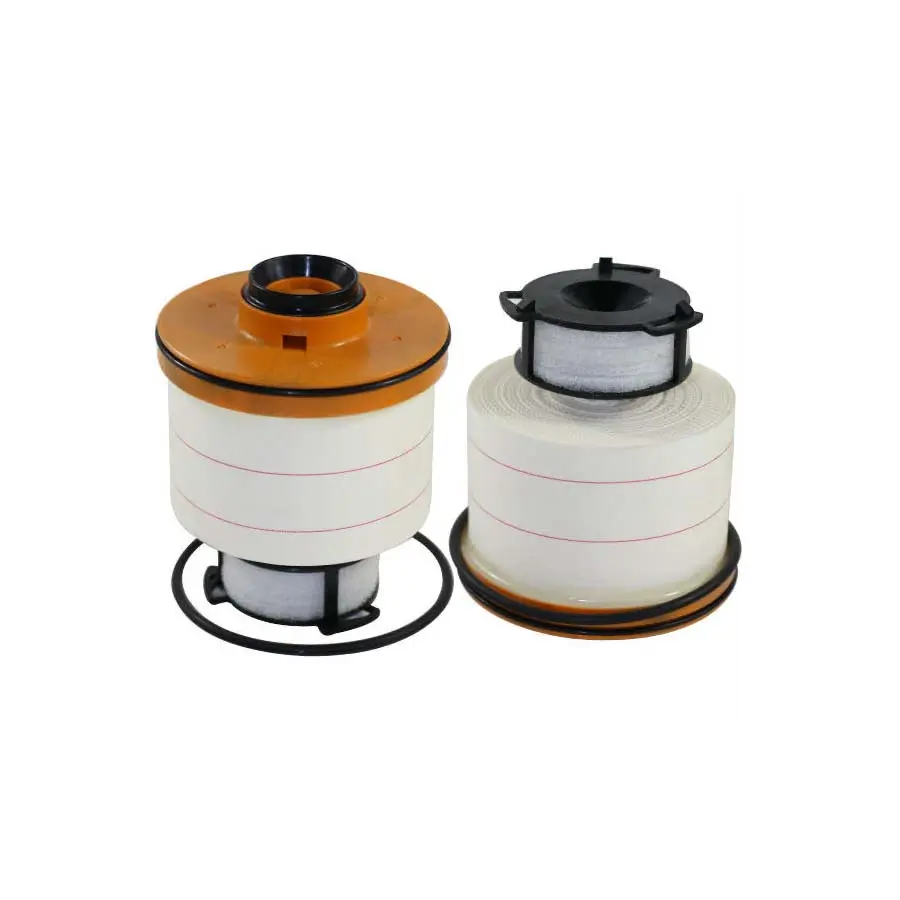 FUEL FILTER
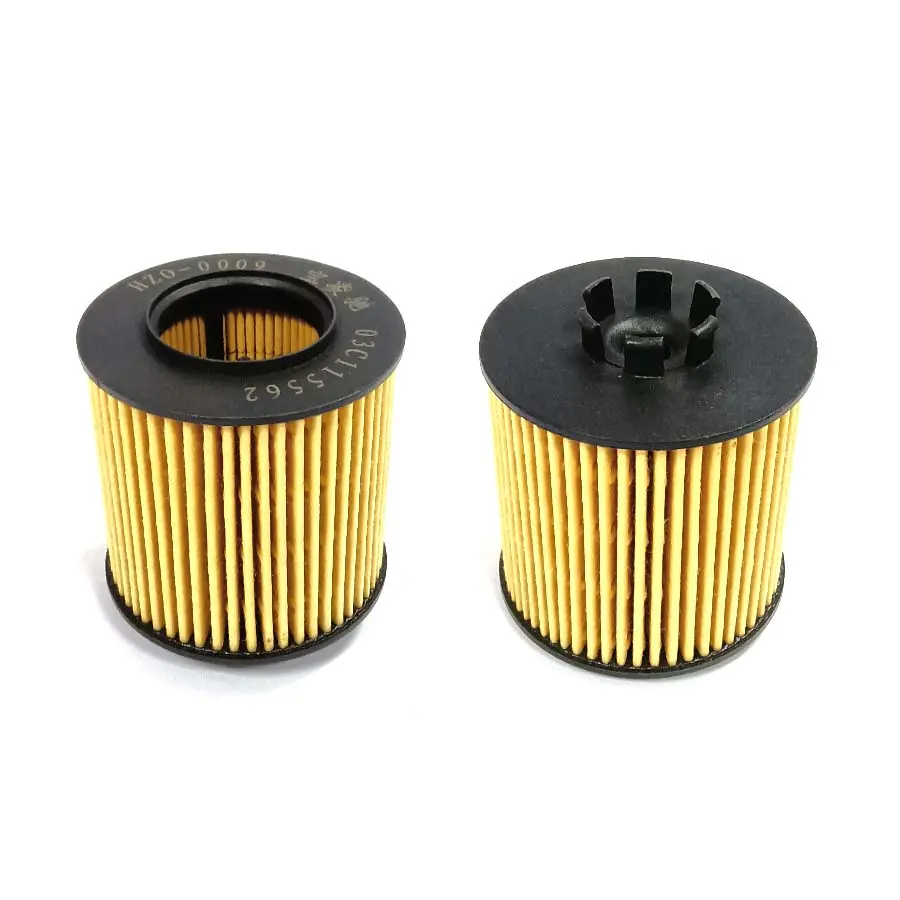 OIL ELEMENT FILTER
 OIL FILTER
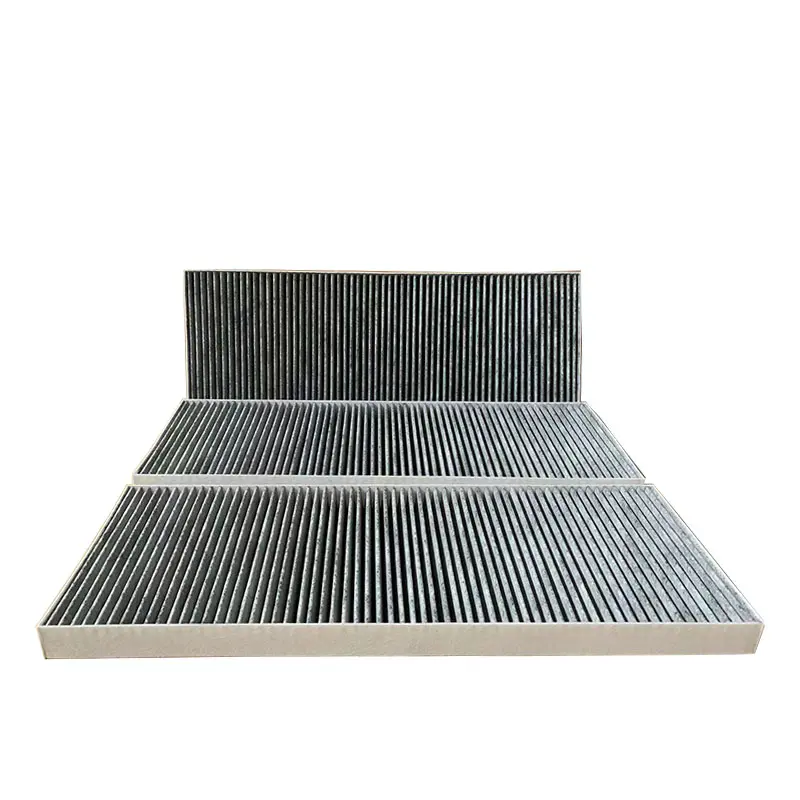 CABIN FILTER
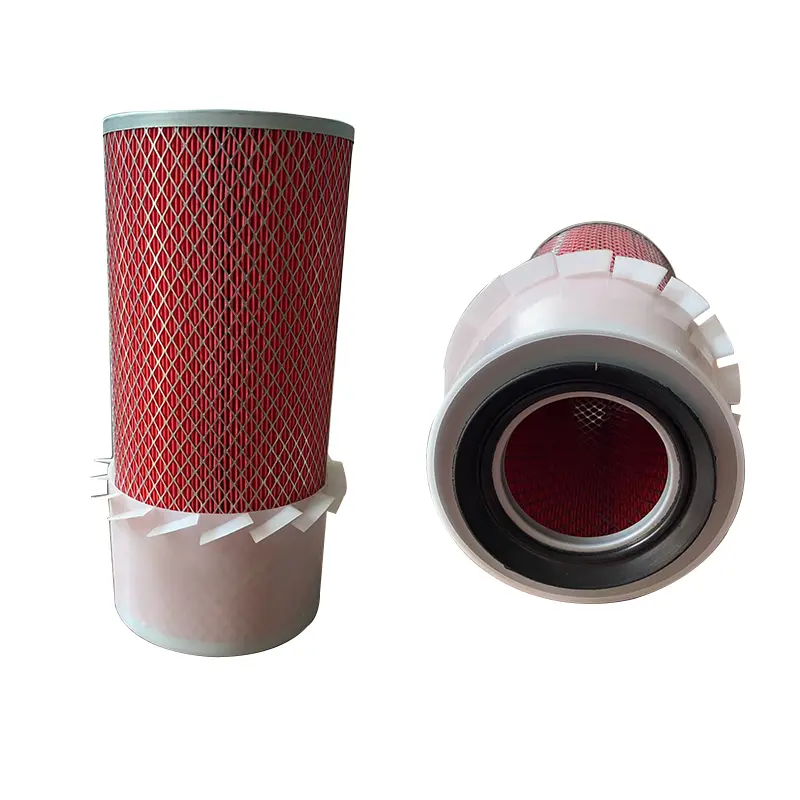 AIR FILTER