Inquiry
Form loading...

Top 10 AC Filter Manufacturers for Global Buyers?

Choosing an Ac Filter manufacturer is no longer a simple price comparison. Global buyers now examine efficiency, pressure drop, material quality, testing, and supply reliability. A filter may look identical on a product page, yet perform differently inside a crowded air-handling unit.

Industry data shows why this market deserves closer attention. Fortune Business Insights estimated the global HVAC filters market at approximately USD 6.8 billion in 2023, with continued growth expected through the decade. Grand View Research also identifies rising indoor-air-quality awareness as a major demand driver. However, market figures vary between reports. Definitions differ, and that matters. A residential replacement filter is not equivalent to a hospital-grade filtration system.

ASHRAE Standard 241, published in 2023, further strengthened attention on equivalent clean airflow and infection-risk reduction. William P. Bahnfleth, Ph.D., an indoor-air-quality specialist and former ASHRAE president, has emphasized: “Filtration is one part of a broader indoor air quality strategy.” That sentence deserves attention. No Ac Filter can compensate for poor ventilation, incorrect installation, or neglected maintenance.

This guide reviews ten manufacturers serving international buyers. It considers product range, certification evidence, manufacturing experience, customization, and distribution capability. Details such as frame depth, gasket condition, seal quality, and replacement intervals can affect real performance. Small details matter.

The ranking is not absolute. Regional standards, climate, equipment design, and purchasing volume can change the best choice. Some manufacturers may offer stronger documentation, while others provide better lead times or private-label support. Buyers should verify current specifications directly, because catalogs sometimes lag behind factory changes. A careful comparison is more useful than a confident-looking list.
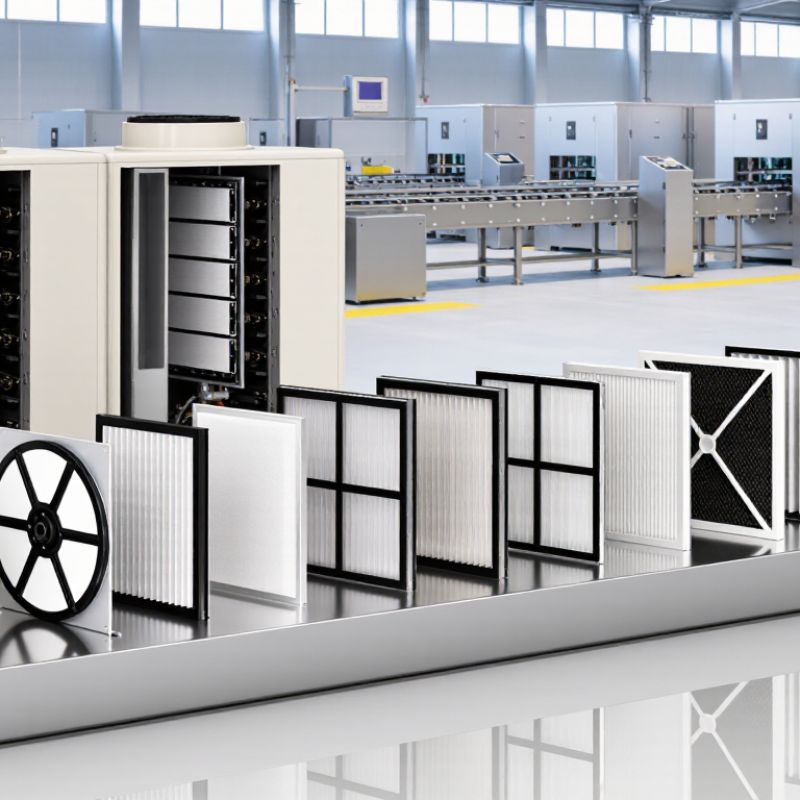
Top 10 AC Filter Manufacturers for Global Buyers?

AC Filter Basics: MERV 8–13, ePM1, and HEPA H13 Efficiency Ratings

For global buyers comparing the top ten AC filter manufacturers, efficiency ratings deserve more attention than catalog photos. MERV 8–13 ratings follow ASHRAE Standard 52.2 testing. MERV 8 captures larger airborne particles, while MERV 13 offers stronger fine-particle control. However, pressure drop also matters. A high-rated filter can reduce airflow when an air-handling unit lacks sufficient fan capacity.

ISO 16890 uses ePM1, ePM2.5, and ePM10 categories. ePM1 focuses on particles around 1 micrometer and smaller. Its percentage rating should not be treated as a direct MERV conversion. The test methods differ. ISO 16890:2016 also requires conditioning before classification, making results more representative than simple initial-efficiency claims. Still, installation quality can weaken real performance. Small gaps around the frame remain a common failure.

HEPA H13 is a different class. Under EN 1822-1:2019, H13 filters provide at least 99.95% overall efficiency at the most penetrating particle size. They require careful sealing and regular maintenance. The U.S. EPA’s Guide to Air Cleaners in the Home also stresses that airflow and operating conditions affect practical removal. Buyers should request test certificates, pressure-drop curves, dimensions, gasket details, and replacement intervals. Ratings help, but they are not magic. Some product data looks precise yet omits fan speed, dust loading, or leakage. That omission deserves questioning.

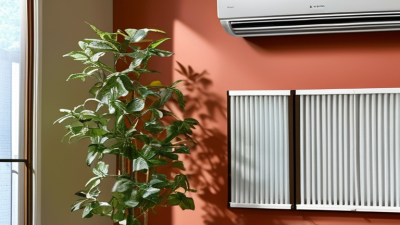
Ranking Metrics: Filtration Efficiency, Pressure Drop, and Service Life

Top 10 AC Filter Manufacturers for Global Buyers

Ranking Metrics: Filtration Efficiency, Pressure Drop, and Service Life

Global buyers should compare AC filter manufacturers through measured performance, not attractive product claims. Filtration efficiency shows how effectively a filter captures dust, pollen, and fine particles. Ask for test conditions, particle sizes, airflow rates, and laboratory standards. A high efficiency rating can mislead when testing uses unrealistically low airflow.

Pressure drop matters just as much. I have seen filters that captured particles well but reduced airflow noticeably. That can increase fan energy use and weaken indoor comfort. Check initial pressure drop and the recommended replacement limit. Small differences become expensive across hospitals, offices, hotels, and factories. Keep it practical.

Service life reflects real operating value. Compare dust-holding capacity, media strength, sealing quality, and performance after extended use. A filter lasting six months on paper may require earlier replacement in a dusty coastal or construction environment. Installation quality also changes results. Gaps around the frame can undermine excellent filter media.

For a reliable top-ten ranking, combine verified efficiency data, pressure-drop curves, service-life testing, warranty terms, and technical support. Independent reports deserve more weight than sales brochures. Still, no ranking is perfect. Test methods vary, and field conditions rarely behave neatly. Buyers should request samples and measure airflow before committing to large orders.

Top 10 AC Filter Manufacturers by Certifications, Capacity, and Product Range

Top 10 AC Filter Manufacturers for Global Buyers

A practical top-ten review should examine more than catalog size. The strongest AC filter manufacturers show verifiable certifications, stable capacity, and broad product coverage. ISO 9001 may indicate controlled quality processes. ISO 14001 reflects environmental management. ISO 45001 can demonstrate attention to workplace safety. Product-specific approvals still matter. A general certificate does not prove every filter performs equally. That distinction is often overlooked.

Capacity should be judged through production lines, pleating equipment, testing laboratories, and documented monthly output. Buyers should ask about standard lead times and peak-season delays. A factory producing thousands of filters daily may still struggle with customized dimensions. Batch traceability is important. So are pressure-drop and dust-holding test records. During supplier evaluations, sample consistency often reveals more than impressive machinery. Numbers can be polished.

Product range also separates capable manufacturers from narrow suppliers. Useful categories include panel filters, pleated filters, bag filters, washable filters, activated-carbon filters, and higher-efficiency air filters. Manufacturers serving commercial buildings, hospitals, workshops, and clean environments should explain each product’s application limits. Look for clear media specifications, frame materials, gasket options, and replacement guidance. I would not rely on a brochure alone. Independent test reports and recent production samples provide stronger evidence, although they still cannot predict every shipment.

Top 10 AC Filter Manufacturers by Certifications, Capacity, and Product Range

An anonymized comparison of leading AC and HVAC filtration supplier profiles for global buyers. The table emphasizes internationally recognized certification systems, manufacturing scale, application coverage, and export readiness.

Rank Manufacturer Profile Primary Product Range Certification Coverage Indicative Annual Capacity Filter Classes / Performance Customization Capability Export Readiness
1 Manufacturer Profile A Panel filters Pleated filters Bag filters HEPA filters Carbon filters ISO 9001 ISO 14001 ISO 45001 EN 1822 10–20 million units/year Coarse, ePM10, ePM2.5, ePM1, H13–H14 HEPA OEM dimensions, private labeling, frame materials, gasket options, and airflow optimization Multi-region export support; standard commercial documentation and palletized shipping
2 Manufacturer Profile B Pleated filters Mini-pleat filters V-bank filters HEPA filters ISO 9001 ISO 14001 ISO 16890 EN 1822 8–15 million units/year ePM10, ePM2.5, ePM1, H10–H14 HEPA Custom sizes, pleat depth, media grade, pressure-drop targets, and fire-performance options Strong distributor support; suitable for container-scale and mixed-SKU orders
3 Manufacturer Profile C Residential AC filters Commercial HVAC filters Washable filters Carbon panels ISO 9001 ISO 16890 RoHS 6–12 million units/year Coarse, ePM10, ePM2.5, ePM1, activated-carbon filtration Retail packaging, cut-to-size service, custom frames, printed cartons, and replacement programs Well suited to private-label importers and regional HVAC wholesalers
4 Manufacturer Profile D Bag filters Rigid pocket filters V-bank filters Pre-filters ISO 9001 ISO 14001 ISO 16890 5–10 million units/year Coarse, ePM10, ePM2.5, ePM1, high-capacity fine filtration Bag count, pocket length, header design, media selection, and airflow-specific construction Established project supply capability for air-handling units and commercial buildings
5 Manufacturer Profile E Panel filters Pleated filters Metal-mesh filters Grease filters ISO 9001 ISO 16890 RoHS 4–9 million units/year Coarse, ePM10, washable pre-filtration, and kitchen exhaust filtration Galvanized, aluminum, stainless-steel, and plastic frame configurations Competitive for standard replacement sizes and recurring OEM orders
6 Manufacturer Profile F HEPA filters ULPA filters Mini-pleat filters Cleanroom modules ISO 9001 ISO 14001 EN 1822 ISO 29463 2–6 million units/year H13–H14 HEPA and selected U15–U17 ULPA applications Individual filter testing, gel-seal or knife-edge designs, scan-test documentation, and custom housings Best suited to healthcare, laboratory, pharmaceutical, and semiconductor applications
7 Manufacturer Profile G Residential HVAC filters Pleated panel filters Electrostatic media Carbon filters ISO 9001 ISO 16890 RoHS 3–8 million units/year Coarse, ePM10, ePM2.5, ePM1, odor-control filtration Common residential sizes, MERV-oriented product positioning, carton design, and subscription replacement packs Strong fit for e-commerce, retail, and residential HVAC distribution channels
8 Manufacturer Profile H Automotive cabin filters AC filters Carbon filters Melt-blown media ISO 9001 ISO 14001 IATF 16949 5–11 million units/year Particle filtration, activated-carbon filtration, and odor-reduction media Vehicle-specific tooling, multilayer media, nonwoven backing, and printed retail packaging Suitable for automotive aftermarket, fleet service, and cross-border distribution
9 Manufacturer Profile I Industrial air filters Oil-mist filters Dust filters Metal filters ISO 9001 ISO 14001 ISO 45001 1–4 million units/year Coarse and fine particulate filtration for industrial ventilation and process air High-temperature materials, metal frames, custom sealing, and application-specific engineering Project-oriented supplier with technical support for industrial installations
10 Manufacturer Profile J Compact filters Panel filters Bag filters Carbon filters ISO 9001 ISO 16890 EN 1822 1–3 million units/year Coarse, ePM10, ePM2.5, ePM1, and selected H13 HEPA products Low-to-medium minimum order quantities, standard custom sizes, and mixed-container programs Flexible option for importers requiring multiple product categories from one supplier

Certification references include ISO 9001 for quality management, ISO 14001 for environmental management, ISO 45001 for occupational health and safety, ISO 16890 for general ventilation air-filter testing, EN 1822 and ISO 29463 for high-efficiency filtration, RoHS for restricted substances, and IATF 16949 for automotive quality management.

Global Standards: ASHRAE 52.2, ISO 16890, EN 1822, and ISO 29463

Top 10 AC Filter Manufacturers for Global Buyers

Global buyers should compare AC filter manufacturers through test standards, not marketing labels. ASHRAE 52.2 measures removal efficiency across defined particle sizes and supports MERV classification. It is useful for comparing general ventilation filters in commercial buildings. ISO 16890 classifies filters by ePM1, ePM2.5, and ePM10 performance. These values connect more closely with outdoor particulate pollution. However, results depend on airflow, conditioning, and laboratory methods. A higher number does not always mean better system performance.

EN 1822 and ISO 29463 focus on high-efficiency filters, including HEPA and ULPA grades. Both standards use the most penetrating particle size, or MPPS, during testing. Buyers should request the filter class, pressure-drop data, leak-test method, and airflow range. Field inspections often find a gap between laboratory results and installed performance. Gaskets may compress unevenly. Frames can also distort during transport. That part is easy to overlook.

Tips: Ask for current test reports and traceable serial numbers. Match the standard to the application, then check energy use and replacement intervals. Do not accept “HEPA-grade” without a stated EN 1822 or ISO 29463 classification. It sounds convincing, but it proves little. Shorter service life can increase total cost, even when initial efficiency looks impressive.

Top 10 AC Filter Manufacturers for Global Buyers: Global Efficiency Standards

Reference benchmarks from EN 1822 high-efficiency filter classes, with comparison context for ASHRAE 52.2, ISO 16890, and ISO 29463.

ASHRAE 52.2
Classifies general ventilation filters by MERV using particle-size efficiency bands: 0.3–1 µm, 1–3 µm, and 3–10 µm.
ISO 16890
Reports particulate-matter efficiency as ePM1, ePM2.5, ePM10, and coarse categories rather than a single overall efficiency value.
EN 1822
Uses local and integral efficiency testing at the most penetrating particle size for EPA, HEPA, and ULPA filters.
ISO 29463
Provides an international classification framework for high-efficiency filters and is closely aligned with EN 1822 testing concepts.

The chart shows minimum integral efficiency thresholds associated with EN 1822 classes. ASHRAE 52.2 MERV ratings and ISO 16890 ePM categories are not directly interchangeable with EN 1822 or ISO 29463 classes because their test methods and reporting metrics differ.

Buyer Checks: Test Reports, MOQ, Lead Time, Warranty, and Total Cost

Top 10 AC Filter Manufacturers for Global Buyers?

A credible manufacturer should provide current test reports for filtration efficiency, pressure drop, airflow, and fire performance. Check the laboratory name, test standard, sample size, and testing date. A polished PDF can still hide weak evidence. Request a report matching the exact filter model, not a similar product. I once overlooked this detail. It created unnecessary qualification work later.

MOQ affects more than unit price. Ask whether the minimum applies per size, frame material, or monthly order. Confirm lead time for samples, first production, and repeat orders. Get these dates in writing. A ten-day promise may exclude tooling, inspection, and port handling. Also check packaging dimensions, because oversized cartons can increase freight costs sharply.

Warranty terms deserve careful reading. Confirm coverage period, claim evidence, replacement timing, and exclusions for moisture or installation errors. Ask for photos, inspection records, and a defined response process. Compare total cost, including samples, tooling, testing, freight, duties, storage, and rejected units. The cheapest quotation may become expensive after delivery. Request a landed-cost worksheet. Then challenge every unclear assumption. Small gaps matter.